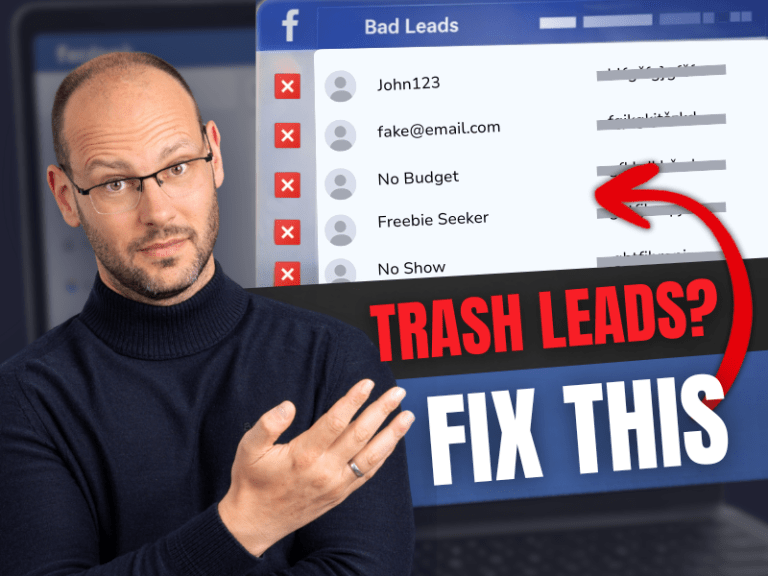
How to Get High-Quality Facebook Leads: The Gatekeeper Strategy for Agencies
Why Facebook Leads Might Be Driving You Crazy (and What to Do About It)
If you’ve ever run Facebook ads and ended up drowning in low-quality leads, you’re not alone.
Many agency owners jump into lead generation with high hopes, only to be met with unqualified prospects who never return your calls—or worse, ghost you after one email.
Sound familiar?
The problem isn’t Facebook itself; it’s the way leads flow into your funnel.
Without a clear filter, you’re casting too wide a net.
Instead of landing high-value clients, you end up with time-wasters, tire kickers, or people who think your services cost the same as their morning coffee.
Frustrating, right?
But don’t worry—we’re here to help. In this post, we’ll show you how to stop playing lead roulette and start bringing in high-ticket prospects. It all comes down to one smart strategy: The Gatekeeper Method.
Let’s dive in and fix this for good!
Guide to Maximizing Facebook Leads with Gatekeepers
Getting poor results from Facebook ads may make you question whether you know how they work at all.
However, like any tool, effectiveness depends on execution.
Poorly targeted or poorly designed ads can feel like a waste, so success requires good planning, testing, and optimization.
Done right, Facebook ads are a reliable way to grow your business by getting more high-quality Facebook leads.
The beauty of FB leads lies in their directness—users don’t need to leave Facebook to express interest.
This simplicity makes it easier to attract and engage with a broader audience. It works for small businesses and large agencies.
Facebook leads are a goldmine for building customer relationships. They provide a starting point to nurture prospects into loyal clients.
Tailor your approach to what they care about and you increase the chances of turning these leads into sales.
How Does Facebook Lead Generation Work?
AI supercharges Facebook lead generation by combining precision targeting with advanced tools like the Facebook Pixel.
Precision Targeting
Precision targeting is about utilizing a hyper-focused audience you can create by targeting your core, custom, and lookalike audiences.
Although it is tempting to expand your custom audience outreach to get as many leads as possible, this approach can backfire.
Sometimes, less is more, and as you get more specific, you increase your chances of getting more leads from Facebook.
Therefore, to get high-quality Facebook leads, incorporate detailed targeting with custom audiences right from the start.
The Facebook Pixel
The Pixel is a tiny snippet of JavaScript code you add to your website to track visitor actions.
Facebook AI analyzes this data to retarget users who’ve shown interest but didn’t convert initially.
For example, if someone visits your site, browses a service, or clicks on a lead magnet but leaves without taking action, the Pixel lets you bring them back with tailored ads.
AI takes it further by learning patterns in user behavior. It identifies which actions signal high intent and adjusts your campaigns in real time to focus on these prospects.
Retargeting ads created through AI are often hyper-personalized—showing users the exact content or offer they engaged with before.
Pay close attention to how you train the Facebook Pixel—it’s the backbone of your ad performance.
Feed it imprecise data, and you’ll create a crowded pool of unqualified visitors who have little to no interest in buying.
Instead, train the Pixel correctly to ensure Facebook’s AI works for you, not against you.
Why Run an Integrated Facebook Lead Generation Campaign?
An integrated lead generation campaign combines the strengths of Facebook’s reach with the credibility and depth of your website.
Facebook excels at capturing attention and driving quick actions, like filling out lead forms, thanks to its massive user base and advanced targeting.
Meanwhile, your website serves as a trusted hub where potential customers can learn more about your brand, explore services, and build confidence in your offer. By linking the two, you create a seamless customer journey.
For instance, Facebook ads can drive traffic to a specific landing page designed to capture leads, while your website’s tracking tools, like the Facebook Pixel, collect data for retargeting.
This integration ensures you stay connected with visitors who don’t convert immediately, bringing them back with personalized ads or email campaigns.
The result?
Higher-quality leads, better brand engagement, and improved conversion rates without wasting ad spend. It’s a win-win strategy.
The secret to effectiveness is aligning the ad type with your goals.
Test different formats, optimize for performance, and ensure your message is clear and compelling.
How to Increase Facebook Lead Quality with Gatekeepers
If you’re stuck dealing with low-quality leads—no conversions, no sales, and wasted ad spend—it’s time for a solution that works.
Let’s explore how to filter the right audience, train Facebook’s AI effectively, and improve your lead quality step-by-step.
Here is my effective gatekeeper strategy, which uses conditional logic to correctly train AI to deliver the right leads to your doorstep.
1. The Lead Quality Problem
- Many leads generated through Facebook ads—especially instant forms—are unqualified.
- Without proper filters, your landing page attracts a mix of people, including those who aren’t your target audience.
- Poor targeting trains Facebook’s Pixel with inaccurate data, resulting in wasted ad spend and low-quality leads.
2. The Gatekeeper Strategy
Think of your funnel as an exclusive party. You need a “gatekeeper” to ensure only the right people get through.
This strategy involves two key components:
- The Ad
- The Landing Page

3. How to Structure Your Ad
- The Hook
- Clearly identify your audience. For example, start with, “Are you a business owner with 10+ employees?”
- Repeating this “identity filter” throughout your ad helps repel unqualified leads.
- The Offer
- Highlight what’s in it for your audience. This could be a free consultation, guide, or specific solution to a pain point.
- The Call-to-Action (CTA)
- Guide users to the next step, such as filling out a form or visiting your landing page.

4. Preparing the Landing Page
Your landing page should use questions with conditional logic to filter out unqualified leads.
Here’s how:
- Question 1: Role in Business
- Provide options like “Business Owner,” “Marketing Manager,” or “Assistant.”
- Only count “Business Owner” as a valid lead.
- Question 2: Number of Employees
- Use ranges such as “1–5,” “6–10,” “11–50,” etc.
- Only accept leads with 10+ employees to match your target audience.

5. The Power of Conditional Logic
- Leads who don’t meet your criteria won’t be reported back to the Facebook Pixel.
- This ensures the Pixel learns from the right data, optimizing your ads to attract high-quality leads.

Why Video Ads Work Best
Video ads are ideal for setting up this strategy.
They allow you to:
- Capture attention with a clear hook.
- Speak directly to your audience using identity filters.
- Explain your offer and guide users to the next step effectively.

Key Takeaways for High-Quality Leads
- Filter your audience: Use clear criteria in your ads and landing page.
- Train the Pixel correctly: Only report qualified leads to optimize Facebook’s AI.
- Leverage video ads: They’re engaging and allow for detailed messaging.
By implementing this structure, you’ll attract leads that match your ideal customer profile, improve campaign performance, and scale your business with confidence.
Build a Sales Funnel That Brings in High-Quality Leads on Autopilot
With our AI Sales Funnel Builder, you’ll get a complete system designed to:
- Attract leads through microtested product-based offers.
- Scale your business using paid ad strategies that actually work.
- Leverage organic lead generation for long-term, sustainable growth.
Agency owners just like you are using this system to transform their sales process, reduce guesswork, and achieve consistent results.
“Finally got a funnel that generates high-quality leads, even with 200 employees!” – Juri S.
“We had to stop the funnel because of too many leads!” – Lorenz B.
Start building your scalable funnel now and get a system tailored to your agency’s growth goals.
Don’t let another unqualified lead slip through—check it out here!
FAQs:
What Are Facebook Leads?
Facebook leads are users who show interest in your business by sharing their contact information through ads or campaigns.
The information Facebook leads share can be email addresses, phone numbers, or any other details that let you follow up with potential customers.
You can get Facebook leads by offering something valuable.
You can create value with a discount, a limited-time offer, a downloadable freebie, free registration for an event, strong social proof, or exclusive content.
The idea behind Facebook lead generation is to encourage people to fill out lead forms.
What Is a Facebook Lead Ads Form?
A Facebook Lead Ads form is a built-in tool that makes it easy for businesses to collect contact information directly from potential customers.
Unlike traditional ads that redirect users to an external website, these forms keep the entire process within Facebook, minimizing clicks and distractions.
When users click on your lead ad, the form pops up pre-filled with their information, such as name, email, and phone number, based on their Facebook profile. This pre-filling reduces friction, making it faster and more likely for users to submit their details.
Facebook lead gen forms are customizable—you can add specific questions, checkboxes, or dropdowns tailored to your business needs. For example, ask users about their interests, preferred services, or location.
This streamlined experience benefits both users and businesses. Customers enjoy a hassle-free process, while you get high-quality leads ready to be nurtured into sales opportunities.
Facebook Lead Ads: Structure and Content
A Facebook ad that brings your leads has a well-defined structure that combines creative elements and strategic settings to deliver your message effectively. Here’s a breakdown of the key components:
Ad Objective
The foundation of your ad is its goal. Generally, you can choose from objectives like lead generation, traffic, conversions, or brand awareness to align with your campaign’s purpose. In this case, however, the goal is clear – lead generation.
Ad Format
Facebook offers multiple formats, such as image ads, video ads, carousel ads (multiple images/videos), slideshow ads, and lead ads. Each format caters to different marketing goals and audience preferences. Video ads are most successful—you can understand more about that by watching the video.
Visuals
Eye-catching visuals are the backbone of your ad. Use high-quality videos that resonate with your audience. Incorporating your brand colors and keeping the design consistent is a good place to start design-wise. However, in the end, only real-time testing will show you which ads do and don’t work.
Headline
Your headline needs to grab attention quickly. Make it clear, benefit-driven, and concise to spark interest.
Ad Copy
The ad text supports your headline and explains the value of your offer. Keep it engaging and action-oriented. Focus on benefits rather than features.
Call-to-Action (CTA)
Your CTA button guides users to take the desired action, such as “Sign Up,” “Learn More,” “Get Offer,” and “Contact Us.”
Targeting Options
Facebook’s advanced targeting lets you narrow your audience based on demographics, interests, and behaviors, or retarget website visitors using the Pixel.
Ad Placement
Decide where your ad appears: Facebook’s feed, Stories, Messenger, Instagram, or Audience Network. Placements can be automatic or manual.
Ad Creative Testing
Test different variations of headlines, visuals, and CTAs to see what performs best. A/B testing is crucial for optimizing performance. Make sure you create and test your ad hypotheses correctly. Otherwise, you may draw inconsistent conclusions that are simply—wrong.
Ad Budget and Bidding
Set a daily or lifetime budget and choose your bidding strategy, such as cost-per-click (CPC) or cost-per-lead (CPL), to manage your ad spend effectively.
In short, a successful Facebook ad combines compelling content with smart targeting and consistent testing to engage users and achieve your marketing goals.
Which Facebook Ads Are Most Effective?
The most effective Facebook ads are those tailored to specific objectives and audiences, combining attention-grabbing content with strategic targeting. Here’s what works best:
Lead Ads
These are great for collecting user information directly within Facebook. They work especially well when paired with irresistible offers like free guides, consultations, or discounts.
Video Ads
Videos are engaging and allow you to tell a story quickly. Short, snappy videos with captions perform best, especially when highlighting product benefits or customer success stories.
Carousel Ads
These ads let you showcase multiple images or products in a single ad, perfect for e-commerce or storytelling. Each card can have its own link, increasing the chances of interaction.
Dynamic Ads
Ideal for retargeting, these ads show personalized content, like products a user viewed on your website, boosting conversion rates.
Stories Ads
Full-screen vertical ads in Stories feel natural and engaging. Use eye-catching visuals and concise text to hook viewers quickly.
Retargeting Ads
Ads that re-engage users who visited your website or interacted with your brand are highly effective. Use the Facebook Pixel to track and target these audiences.
How Much Does Facebook Advertising Cost?
Facebook ads costs vary based on factors like your campaign goals, audience, competition, and bidding strategy. Here’s a breakdown of what influences your budget:
Campaign objective
Costs depend on your goal—whether it’s clicks, leads, or conversions. For example, lead generation ads might cost more per result than awareness ads.
If you want to generate high-quality leads, it is worth paying more per lead. To learn why expensive leads are good, skip to the section about Facebook lead generation with gatekeepers. Alternatively, watch the video below.
Audience targeting
The more specific your audience (e.g., niche industries or high-income demographics), the higher the cost due to competition for that audience.
Bidding strategy
Facebook allows manual or automatic bidding. With manual bidding, you control the maximum amount you’re willing to pay, while automatic bidding optimizes for results within your budget.
Ad placement
Ads shown in competitive spaces like the News Feed or Instagram Stories tend to cost more than less popular placements.
Average Costs
- CPC (Cost Per Click): Typically $0.50–$3.50 depending on the industry.
- CPM (Cost Per 1,000 Impressions): Around $5–$12 on average.
- CPL (Cost Per Lead): Varies widely, often $5–$30 based on your targeting.
Facebook’s flexibility lets you set daily or lifetime budgets, starting as low as $5 per day. Testing and optimizing campaigns is key to maximizing value while keeping costs manageable.